

Colour, Form & Abstraction
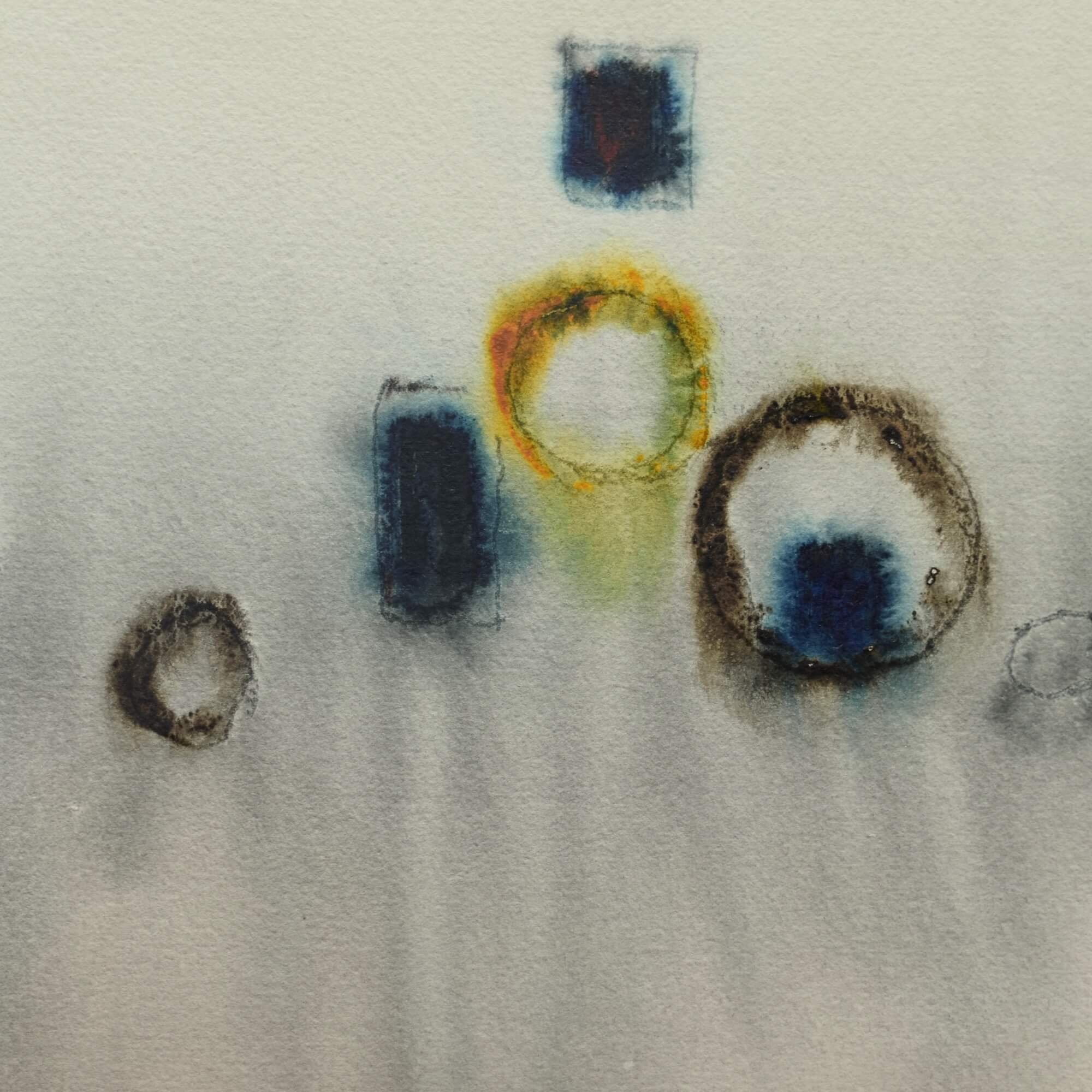
Newcombe's paintings simplify the landscape into expressive forms and carefully balanced compositions. Rather than describing a place in detail, his work captures its atmosphere through colour, movement and rhythm.
His use of layered washes and gestural marks creates paintings that continue to reveal new details over time, making them both visually engaging and quietly contemplative.

William Newcombe was a Canadian-born artist whose career bridged two important artistic landscapes. After establishing himself in Canada, he settled in London during the 1950s, where his work became part of Britain's post-war modernist movement.
Working across watercolour, oil and mixed media, Newcombe explored abstraction through colour, shape and texture, creating paintings that balance structure with spontaneity. His work reflects a confident, experimental approach while remaining deeply connected to the landscape and the natural world.
A Lasting Legacy
Throughout his career, Newcombe exhibited widely in Canada, Europe and the UK, with works now held in major public collections including the Government Art Collection and the Art Gallery of Ontario.
At Hutt Decor, I was drawn to Newcombe's work for its expressive use of colour, confident abstraction and ability to bring warmth, depth and atmosphere to an interior.
Public Collections
William Newcombe's work is represented in major public collections including The Art Gallery of Ontario, The Government Art Collection and The Museum of Fine Arts, Boston.
His paintings continue to be appreciated for their expressive use of colour, abstraction and their contribution to modern Canadian art.